
24: Make A Little Room
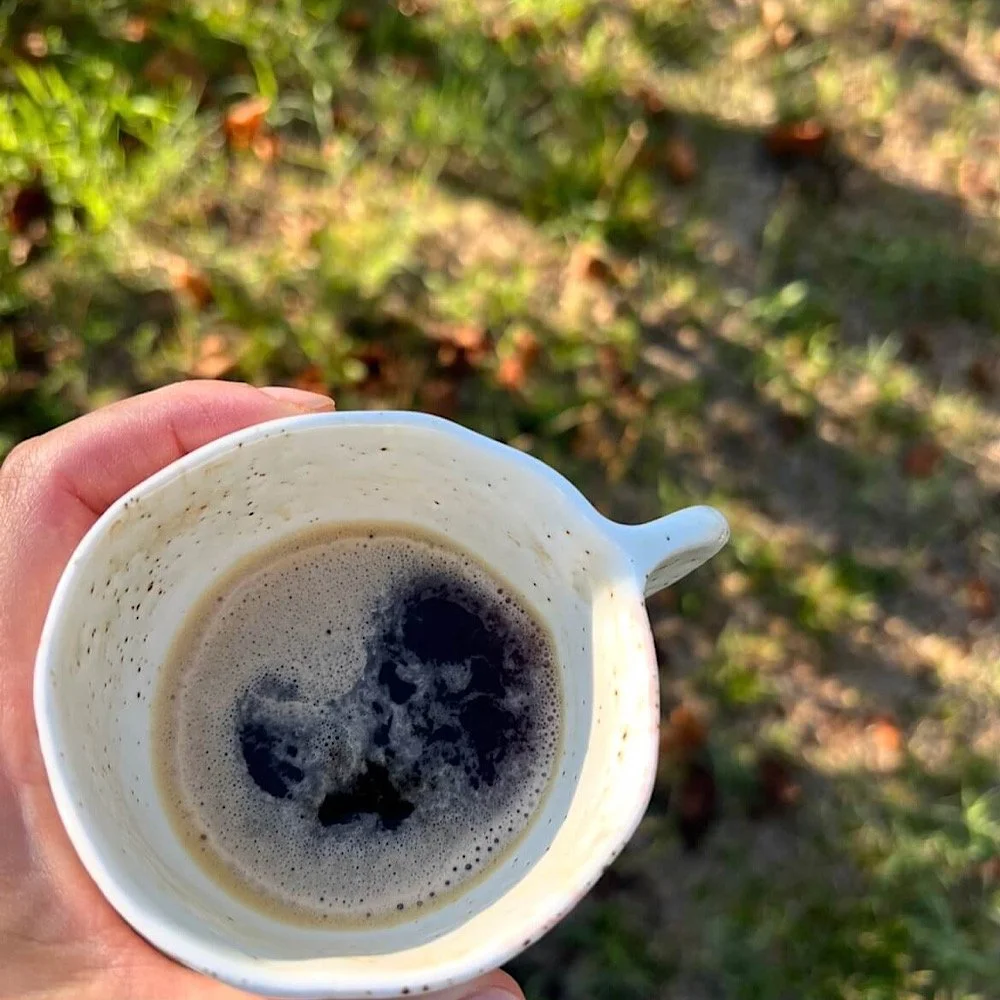
Maybe you want to make more room for silence and solitude in your life with God, but when you finally get quiet, you’re not quite sure what you’re supposed to do.
Should you pray? Listen? Wait for something to happen? And if your mind wanders, God doesn’t seem especially near, or you get up without any new clarity, did you do it wrong?
Today we’ll explore the practice of silence and solitude—not as another spiritual practice to get right, but as a way of simply being with God. And rather than only talking about silence, we’ll practice a little of it together. Listen in.
Links + Resources From This Episode:
Ruth Haley Barton, Invitation to Solitude and Silence
Start with a 21-day Guest Seat at The Table
Find me on Instagram @denisa.o.nica
Come sit with us at The Table
Silence doesn’t always have to be solitary. At The Table, we make room for silence, reflection, Scripture, and honest conversation together.
If you’d like to experience it for yourself, the Guest Seat gives you three weeks inside the community, including a live Gathering.
Join us through the 21-day Guest Seat
Find Denisa Elsewhere:
Join Denisa's Substack
-
I’m Denisa Nica, and welcome to Walking Anyway. You’re listening to episode 24.
This is a podcast about living faithfully in uncertain seasons, when life feels unclear and nothing is quite settling yet. If you’re not quite sure how to move through this in a way that feels steady and true, you’re in the right place to keep walking anyway. Each week I offer a reflection and a gentle way to help you live faithfully, one ordinary step at a time.
I’m an author and spiritual director, and the founder of The Table—an online contemplative community shaped by a weekly rhythm, where women practice this kind of faithful living together, at their own pace, in the middle of their real lives and faith.
I live in Spain, where life moves a little slower, and that has changed the way I pay attention and the way I live inside my own life.
Today, I want to talk about one of the spiritual practices that has shaped my own life with God in significant ways: silence and solitude.
A few of you have been asking me about this lately—what it looks like, how I practice it, and what you actually do when everything gets quiet.
So today, we’ll spend some time there. And we’ll even practice a little silence together.
Listen in.
There are different kinds of silence. The silence of an empty house after everyone has left.the silence after a question you don’t quite know how to answer. The silence of sitting beside someone who is grieving, when there really isn’t anything to say.
And then there is the silence we choose.
A few minutes before anyone else wakes up. A walk without anything in your ears. Sitting somewhere without reading or listening or trying to get anything done.
Maybe you love this kind of silence. Or maybe you avoid it.
Perhaps silence has been part of your life with God for years. Or you’ve never thought of silence as something you might intentionally practice at all.
Because silence sounds simple enough.
You stop talking, you put the phone down and you sit there.
And then what? Should you pray? Are you supposed to listen? And for what?
What do you do with all the thoughts that suddenly seem much louder than they did five minutes ago? Is God going to say something? How? And how will you know when you’re finished?
I’ve practiced silence and solitude for years. It’s one of my favourite spiritual practices. And probably one of the most difficult for me. Because even now, I can sit in silence and catch myself waiting for the silence to produce something, for it to be fruitful in some way. Peace would be nice, clarity, an answer. Some sense that God is near, or just the hope that when I get up again, the thing I’ve been carrying will feel a little lighter.
Those aren’t bad things to want.
Especially because there are times when we come to God with plenty to say. We know exactly what we want to ask for. We have words for what hurts, what we’re hoping for, what we don’t understand. And then there are times when we’ve said it. We’ve prayed the prayer, asked the question, time when we turned the situation over every way we know how, and we still don’t know. What do we do then?
Sometimes five minutes of silence pass, and the question is still a question. Your mind wandered, the problem didn’t solve itself, God didn’t seem especially near, and now there’s another question: Did I do it wrong?
I wonder how often we bring that question into our life with God. Am I doing this right? Is this working? Is anything happening?
It’s funny, isn’t it? We’ve stopped doing almost everything. We’re sitting still in complete silence, and we can still wonder whether we’re doing it well enough.
Which begs another question, a deeper one: what do we believe the quiet is for?
Silence may not be something you’ve ever thought of as prayer.
Christians have been making room for silence and solitude as part of life with God for a very long time.
And I know those words can sound like something belonging to monks and monasteries. But they can be much more ordinary than that.
Solitude isn’t simply being alone. It’s choosing, for a little while, to step away from the other voices that usually accompany us, so we can become available to ourselves and to God. And silence is what happens when, for a little while, we resist immediately filling that space.
Sometimes other voices and company is exactly what we need. We pray with words, read Scripture, we sing, we ask and confess and lament and give thanks. But there are also times when we stop using words. Not to empty our minds, that is not the Christian way, or to reach some special spiritual state. Also, we’re not trying to get quiet enough so that God will finally speak.
We stop using words, as a spiritual practice, just to be there.
Think about the people we are closest to, they are the ones we can sit beside without needing to fill every minute. We can be in the car together, walk beside each other, eat or drink a coffee without having anything to say. And this silence doesn’t mean there’s been a rupture or three’s something wrong between us. Relationship also includes simply being with someone.
And I wonder if sometimes we assume that being with God needs to look different from our closest relationships.
I suppose that’s part of what silence can teach us. Not how to make God present, but how to be present to the God who is already here, because God’s presence isn’t dependent on the quiet.
This reminds me of Brother Lawrence here. If you never heard of him, he was a seventeenth-century monk, but much of his life with God wasn’t lived in the silence of a chapel. He worked in the monastery kitchen. And what he discovered there, was that he didn’t need to escape the noise to find God.
He wrote that even in the noise and demands of the kitchen, he could “possess God in as great tranquility” as he could, while kneeling in prayer.
I love that image. A monk in a noisy kitchen, because the point of silence isn’t to build a life quiet enough for God to enter. The silence doesn’t make God present. It gives us a different way of being present to the God who already is.
And that can happen in very ordinary places.
Five minutes in the car before you go inside. Part of a walk without anything playing in your ears. A few minutes sitting with your tea. Small spaces count.
So back to the question:
What happens when we stop filling the space?
Not what should happen, what we hope will happen, what actually happens?
One of the first things we may notice is that when everything around us gets quiet, everything inside us doesn’t. You sit down for five minutes and yesterday’s conversation with your brother starts over again. You remember the adult child you’re worried about. You notice how tired you are. Or angry, or lonely, or maybe you’re simply bored.
And somewhere around minute three, you start wondering how long you’ve been sitting there.
It’s so easy to assume this means we aren’t very good at silence. But the silence didn’t create those things, we just stopped for a few minutes.
Sometimes that’s uncomfortable, sometimes it’s a relief and sometimes it’s both.
Please don’t hear me saying that music or conversation or books or podcasts are a problem. They’re gifts that keep us company, give us language, make us laugh and sometimes help us carry things we can’t carry alone.
But occasionally, when we don’t immediately reach for something else, we notice what is already there. And we discover that all the words and activity haven’t only been keeping us company, in fact they’ve also made it possible not to notice something in us.
The tiredness, the sadness, the question we’ve been carrying, and even nothing quite that significant. Maybe we simply notice how difficult it’s to be still. And we don’t necessarily have to do anything with it.
This is where silence can still be difficult for me, not necessarily the being quiet. The not immediately doing something with what I find there.
The thing is, I can turn almost anything into a question that needs answering. Why am I feeling this? What am I supposed to do about it? Is God trying to tell me something?Maybe, but maybe not. O not yet.
Not every thought that appears in silence is a message. I don’t need to interpret every feeling, or to make everything that rises into a lesson. Some days you think about groceries because you need groceries. Other days your mind wanders because human minds wander. And sometimes something tender rises that deserves your attention. Silence gives us room for all of it without requiring us to decide immediately what any of it means.
If you’re been around for a minute, you know I love the Psalms. There’s a line in Psalm 62:
For God alone my soul waits in silence;
from him comes my salvation.
He alone is my rock and my salvation,
my fortress; I shall not be greatly shaken.I keep coming back to this word, Waits.
You can choose to stay, but you can’t control what happens next. For God alone my soul waits in silence.
So, rather than keep talking about silence, I’d like to invite you to practice it together. In a moment, I’m going to stop talking for one minute. A full minute. Depending on where you are and how accustomed you are to silence, that might feel very short, or surprisingly and even painfully long.
You don’t need a particular posture. If you’re driving, keep your eyes open. If you’re walking, keep walking. You don’t need to clear your mind. You don’t need to listen especially hard for God. Whatever this minute holds, let it be what it is. This isn’t a test of whether you’re good at silence. We’re just going to leave one minute unfilled.
And when it’s over, I’ll come back.
Ready?
Let’s make some room.
I’m here.
Before we move on— what did you notice? Don’t worry yet about what it means. Just notice what was there.
Maybe something came to your attention. Did your mind wander? Maybe you were aware of God, or you weren’t. It’s possible that nothing much happened. Nothing has gone wrong. That minute didn’t need to become anything. You made some room, and for one minute, you didn’t decide what had to fill it.
I can still get up from silence and wonder what I got from it. But I’m learning to leave some of those minutes alone, to let them be what they were. Because there will be times when silence feels full: a Scripture that comes to mind, a thing that becomes clear, you notice grief you’ve been carrying or start to know what the next faithful thing might be. Or you experience God’s nearness in a way you didn’t a few minutes earlier.
Receive those moments when they come, but remember, they aren’t proof that the silence worked. And their absence isn’t proof that it didn’t.
There will also be days when the room stays a room, the question remains unanswered, you get up without clarity and God seems no nearer than when you sat down.
This may be one of the deeper things silence has been teaching me: Can I remain with God when I cannot measure what is happening? Can I trust that God’s presence isn’t dependent upon my ability to perceive it? Because in silence, we aren’t trying to get God to come closer. We’re consenting to be with the God who is already here. Whether we experience that presence or not.
This is what the practice looks like in my own life these days. Most mornings, before I move into words or do much of anything else, I set a timer on my phone for twenty minutes. And I sit. I do mean sit. I love walking, and walking is one of the ways I pray, but for these twenty minutes I try to stay still. I sit down before I leave the house and let myself be there. Some mornings those twenty minutes feel spacious, and others, my mind goes everywhere. Other times something rises that I want to pay attention to, yet on other days nothing much does.
And I’ve noticed that on the days when life doesn’t allow for it—when I have to get up unusually early, I’m traveling, or circumstances simply change the morning—I miss it. There’s a restlessness in me. And I don’t necessarily take that restlessness to mean anything. I just notice it.
And please don’t hear twenty minutes and think that’s where you need to begin. If silence is new to you, maybe begin with two.
Set a timer. Find somewhere you can sit comfortably and stay awake, and let those two minutes be what they are.
If, over time, you find yourself wanting to stay a little longer, you can. Add another minute, or a few, the number isn’t really the point. The rhythm is. A small, regular practice will probably form us more than occasionally trying to sit in silence for a very long time.
Maybe sometime this week, a small pocket of silence and solitude will find you. Before you start the car, while you’re drinking your coffee, somewhere in the middle of a walk.
You don’t have to turn it into a spiritual moment, listen harder, or come away with anything to show for it. And if what you need that day is a friend’s voice instead, call the friend. Silence isn’t the goal. We’re simply learning to be with God in the life that is actually here. Sometimes with words, sometimes without them. For God alone my soul waits in silence. And perhaps, for today, that’s enough. Nothing has to happen here.
Thanks for listening to episode 24 of Walking Anyway.
I hope this practice gives you a little more room to simply be with God. And maybe you’ll try it for yourself sometime—not because you need to get anywhere or come away with anything, but just to make a little room.
And silence doesn’t always have to be solitary. We practice this at The Table too. Sometimes, in the middle of a gathering, we stop talking. We become still. There’s nothing to figure out, nothing anyone has to say. We simply sit together in the presence of God. And I’ve come to love that silence can be communal too. You can be quiet without being alone. We can help hold the quiet for one another. I think that matters, because solitude isn’t spiritually better than companionship. Some days what you need is silence, and others all you need is a friend’s voice. Both can be ways of receiving the presence of God in the life that is actually here.
If you’d like to experience The Table for yourself, you can join us through the Guest Seat. It gives you three weeks inside the community, and you can come sit around the Table with us for a gathering. or two. There’s a link in the show notes. You’re very welcome to come.
Before you go, if someone came to mind while you were listening today, would you send this episode to them?
Sometimes that’s how we find the words we need — because someone else thought of us and passed them along.
And if Walking Anyway has been good company for you, would you take a moment to rate or review the show wherever you listen? Your review can help someone who is looking for this kind of companionship know that they’ve found the right place. I’m so glad you were here today.
I’ll leave you with these words from Ruth Haley Barton from het book An Invitation To Silence and Solitude: “Waiting on God in the silent places of the soul is an active waiting that contains a seed of expectancy and hope. We wait with the kind of anticipation a night watchman feels as he waits for the morning sun to signal the end of his watch. No matter how many hours of darkness he has to wait through, the watchman knows from experience that morning will come.”
Thanks for listening. I’ll be here with you next time.